From $54
Guided tour
A person, a route and a group. The only way to reach the underground, and the only version where you can ask a question and get an answer about the thing in front of you.
The tour
A guided tour of the Colosseum is not a queue-jump with commentary attached. It is a route through a building whose most interesting parts — the tiers, the arena floor, the corridors underneath — make very little sense on their own. This page is what the standard tour covers, in order, how it differs from walking in with an audio guide, and which of the eighteen tours here is the one to take.
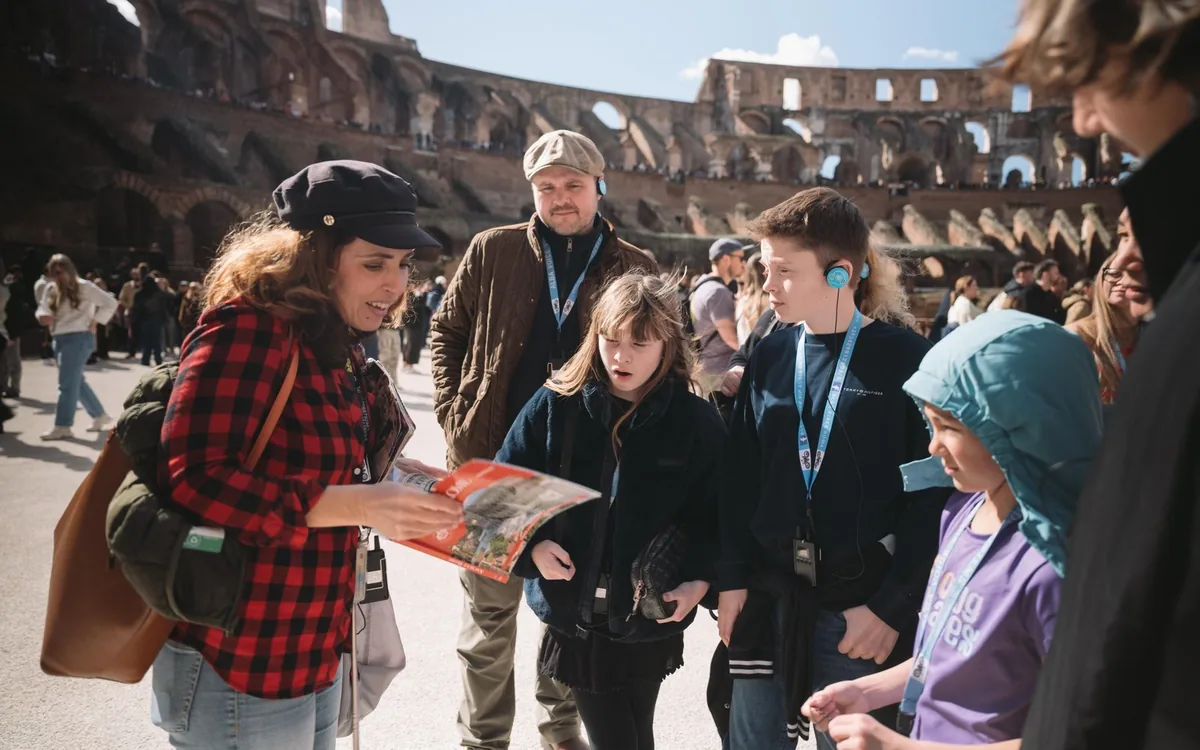
Quick answer
The standard Colosseum guided tour runs about two and a half hours and covers three places on one admission: the Colosseum, the Roman Forum and the Palatine Hill. That is the tour at $54, the most-booked thing on this site with 90,322 reviews. Shorter tours concentrate on the amphitheatre alone; longer ones add the arena floor, the underground, or both. A guide is also the only way into the hypogeum.
What the guide is actually for
A ruin becomes a machine the moment someone shows you where the lift shafts were.
Walk into the Colosseum without a guide and you will see an oval of broken brick with a pit in the middle. It is impressive for about eight minutes. Everything that makes it extraordinary — what the pit is, why the walls have thousands of small holes in them, why the south side is missing, how fifty thousand people got out of it — is invisible unless someone points at it.
The pit. That is the hypogeum, and for the whole working life of the building it was not visible at all. A wooden floor covered it, spread with sand. Underneath ran two storeys of corridors, pens and lift shafts, worked by a crew nobody in the crowd ever saw. A guide standing at the rail can show you where the shafts came up, which is the moment the place stops being a ruin and starts being a machine.
The holes. The travertine blocks were pinned together with iron clamps. Centuries later the iron was dug out and reused, and the sockets stayed. Once you have been shown that, you see it on every surface.
The missing wall. The outer ring is complete on one side and gone on the other, and the reason is not mysterious — the fallen stone became other Roman buildings. Half of what you are looking at is elsewhere in the city.
This is the honest case for a guided tour, and it has nothing to do with queues. The Colosseum rewards being explained more than almost any building in Europe.
The route
The two-and-a-half-hour tour at $54 follows roughly this sequence.
You gather twenty to thirty minutes before the time slot, collect a headset, and go through security as a group. This is the part people underestimate; the group moves at the speed of its slowest bag.
Inside, you come out on the seating levels looking down into the bowl. This is where the shape of the crowd gets explained — who sat where, how the entrances were numbered, and how a building this size emptied faster than most modern stadiums.
The long stop. From the upper level you look straight down into the underground, and a guide walks you through what each row of brickwork was for. If your tour includes the underground, this is where you go down instead of looking down.
Where the reconstructed floor is, and the gate the fighters used. On tours that include the arena floor you walk out onto it here; on the others you see it from above.
Out past the Arch of Constantine and down into the Roman Forum, which is where the tour changes character entirely — from one building to a whole city centre laid flat.
The Via Sacra, the Temple of Saturn, the Curia, the arch at the far end. Without a guide this is the site visitors most often describe as a field of rubble; with one it is the most interesting forty minutes of the day.
Up the slope to the imperial palaces and the view down over the Circus Maximus. Most tours finish here and leave you free to stay on the same ticket.
If you only have half a day in Rome and one decision to make, this is the tour: three sites, one admission, $54, and more reviews than anything else in the niche.
How the eighteen compare→Guided or alone
Three ways to walk in, and what each one actually gets you.
From $54
A person, a route and a group. The only way to reach the underground, and the only version where you can ask a question and get an answer about the thing in front of you.
Base admission plus a rental
Commentary without a route. Fine in the Colosseum, much weaker in the Forum, where the problem is not knowing what a heap of stone used to be. No underground access.
Base admission only
Cheapest, and perfectly reasonable if you have read a great deal in advance. You will still be outside the two parts of the building most people came to see.
Book direct
The most-booked three-site tour, the one with an underground option, a small-group underground tour, and a private guide.
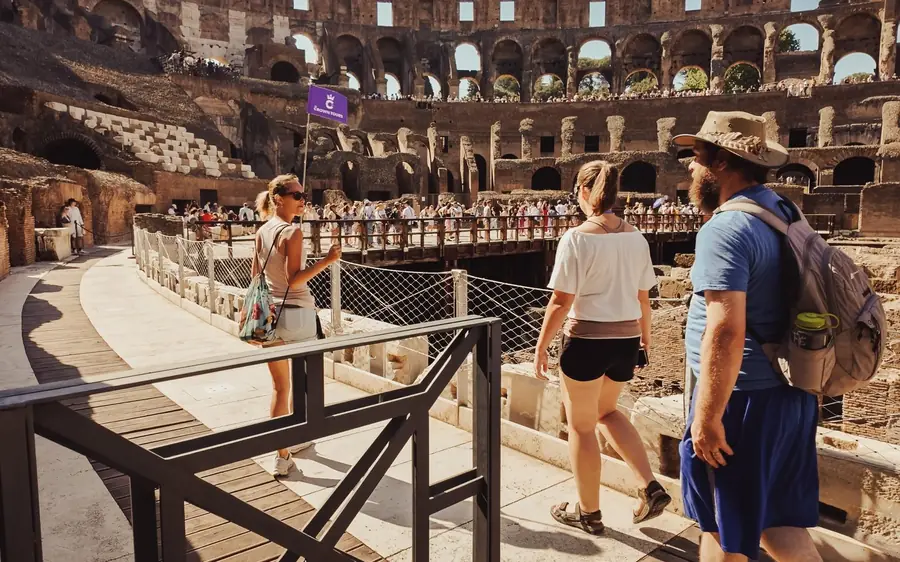
★ 4.8 · 90,322 reviews
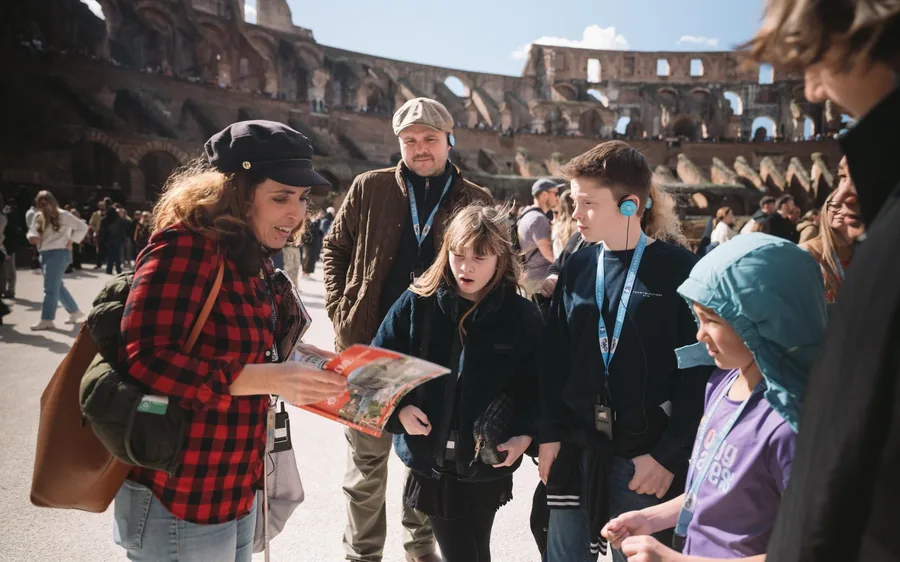
★ 4.7 · 1,266 reviews
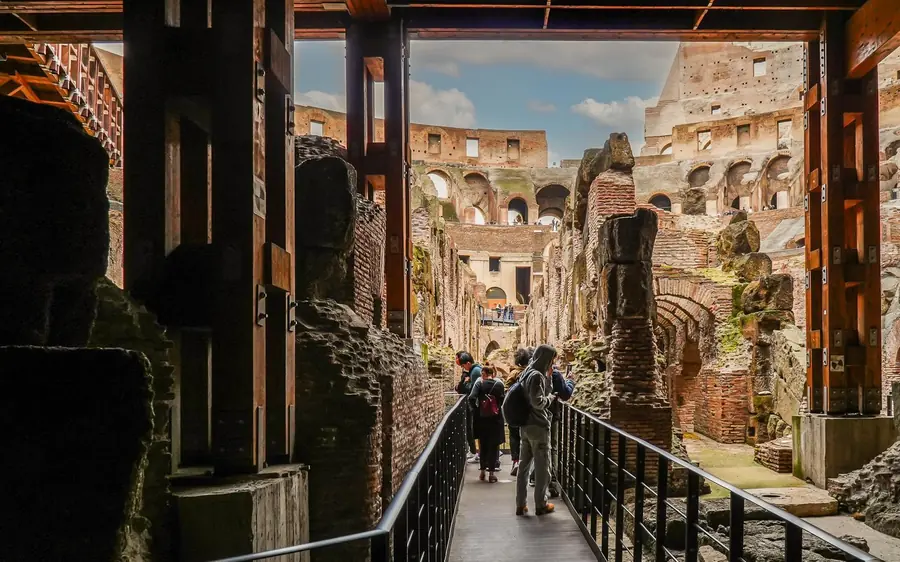
★ 4.8 · 76 reviews
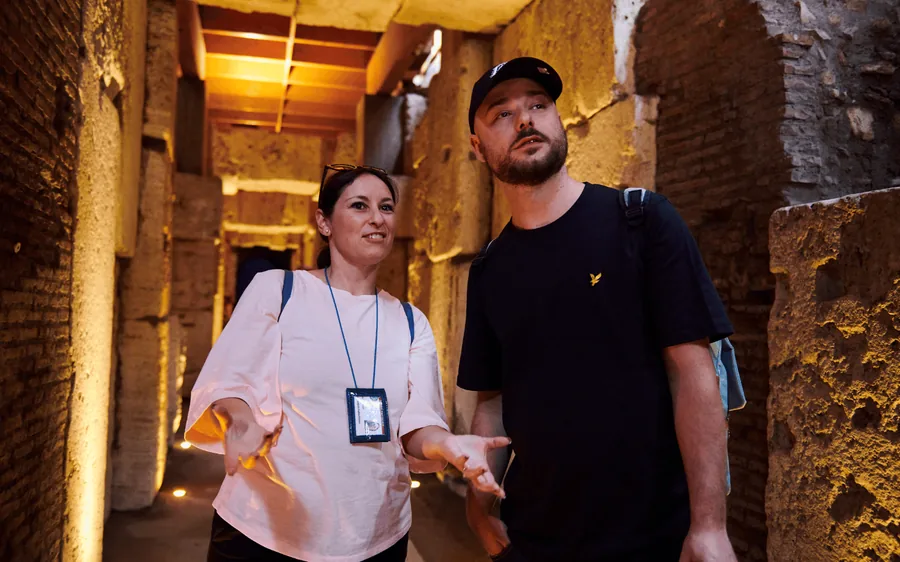
★ 4.9 · 72 reviews
How the tours here differ from one another
Four shapes. Decide which day you want before you compare prices.
The three-site tour. Colosseum, Forum, Palatine in about two and a half hours, from $54. The default, the most-reviewed, and the right answer for a first visit to Rome.
The amphitheatre-only tour. One to two hours, concentrated entirely on the Colosseum, from $81. Good if the Forum is not what you came for, or if you are fitting this around something else in the afternoon.
The add-on tours. Arena floor, underground, or both, from $43 for the arena and $108 for a tour that opens both. These are the ones that sell out first, because the access slots are limited rather than because the tours are popular.
The long days. Three hours with a private guide from $519, six hours across the city at $601, or the full Rome-in-a-day tours that add the Vatican from $110. Different products with the Colosseum inside them.
On the day itself
Early, light, comfortable shoes — and do not leave when the guide does.
Be early, not on time. Meeting points are on the pavement outside, they are busy, and the guide cannot hold the group’s timed slot for one late arrival. Twenty minutes before the stated time is comfortable; ten is not.
Bring the smallest bag you can. Everyone is screened at the entrance and large bags and backpacks do not come in. There is no practical left luggage at the gate, so the bag you arrive with is the bag you carry over the Palatine.
Wear real shoes. The Forum is ancient paving and gravel, the Palatine is a hill, and the three sites together come to roughly two kilometres of walking on surfaces that were laid before the idea of a level pavement.
Carry water. Rome has public drinking fountains, the nasoni, running all over the archaeological park, and they are free and drinkable. An empty bottle and a fountain beat a queue at a kiosk.
Expect sun on the Palatine. There is shade inside the Colosseum and almost none on the hill. Between June and September a hat is not an accessory.
Stay after the tour ends. Most guides finish on the Palatine and leave you inside the park on the same admission. The Forum in the last hour of the afternoon, with the crowd thinning and the light low, is the part regular visitors talk about afterwards.
Common questions
The standard three-site tour runs about two and a half hours — the Colosseum, the Roman Forum and the Palatine Hill. Tours of the amphitheatre alone run one to two hours, and the underground tours run from seventy-five minutes to three hours.
Yes, and there are many of them. Eighteen are compared on this site, from $43 to $1,093. A guided tour is also the only way into the hypogeum, which cannot be visited unaccompanied.
For the Colosseum itself the gap is real but not enormous. For the Roman Forum it is very large, because the problem there is identifying what you are looking at. And an audio guide cannot take you underground at all.
Roughly forty-five minutes to an hour on a standard three-site tour. The rest of the two and a half hours is the Forum and the Palatine. Amphitheatre-only tours spend nearly all their time inside.
They enter on a timed slot as a group, which is quicker than the general line, but everyone still goes through security screening. The saving is real and it is not the main reason to take one.
It varies. The standard tours run larger groups with headsets; the exclusive tour at $327 and the private ones at $519 and above cap the numbers, which matters most in the underground corridors.
For a first visit, the Colosseum, Roman Forum and Palatine Hill tour at $54 — three sites, one admission, and 90,322 reviews. If the underground is the point, start at $108 instead.
Go deeper
Eighteen tours from $43 to $1,093, and which ticket opens which part.
UndergroundThe hypogeum, and why there is no unguided ticket to it.
Arena floorA separate add-on, and the upgrade most people are happiest they paid for.
VerdictEighteen tours ranked for one decision, with a straight answer.
ForumOn the same ticket, and the part that needs a guide most.
Skip the lineWhat fast track skips, and the queue it cannot remove.
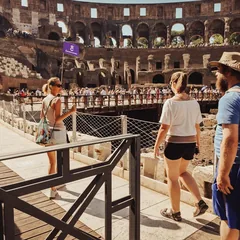
Colosseum, Roman Forum & Palatine Hill Guided Tour
★ 4.8 · 90,322 reviews · Free cancellation 24 h